
Beginning with Health Policies for Mental Health Care, the narrative unfolds in a compelling and distinctive manner, drawing readers into a story that promises to be both engaging and uniquely memorable.
Exploring the impact of health policies on mental health care, this discussion delves into the importance of access, quality services, and the role of different countries in shaping policies.
Health Policies for Mental Health Care
Health policies play a crucial role in ensuring access to mental health care for individuals in need. These policies Artikel the framework for the delivery of services, funding mechanisms, and quality standards that help shape the mental health care landscape.
Comparison of Health Policies in Various Countries
Health policies for mental health care vary significantly across different countries, reflecting the diverse approaches to addressing mental health needs globally. For example, some countries have comprehensive mental health care coverage as part of their universal healthcare system, while others may have more limited coverage or rely on a mix of public and private providers.
Impact of Health Policies on Service Quality
Health policies have a direct impact on the quality of mental health services provided to individuals. Policies that prioritize mental health funding, workforce training, and integration of mental health care into primary care settings tend to result in better outcomes for patients. On the other hand, inadequate policies or underfunding can lead to gaps in service delivery and disparities in access to care.
Healthcare Access
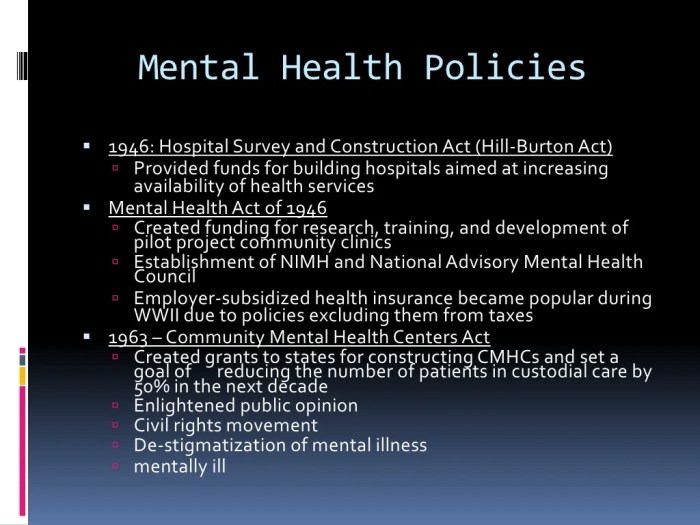
Access to mental health care services is significantly influenced by health policies that determine funding, coverage, and availability of such services. These policies play a crucial role in shaping the accessibility and affordability of mental health care for individuals in need.
Barriers to Accessing Mental Health Care
Barriers to accessing mental health care services include financial constraints, lack of insurance coverage, stigma associated with mental health issues, shortage of mental health providers, and geographical limitations. These barriers can prevent individuals from seeking the necessary care and support for their mental health needs.
- Lack of Insurance Coverage: Many individuals do not have adequate insurance coverage for mental health services, making it difficult for them to afford treatment.
- Stigma: Stigma surrounding mental health can deter individuals from seeking help due to fear of judgment or discrimination.
- Provider Shortages: Shortages of mental health providers, especially in rural areas, can limit access to care for those in need.
- Geographical Limitations: Limited availability of mental health services in certain areas can pose a barrier to access for individuals living in remote or underserved communities.
Government Initiatives in Improving Access to Mental Health Services
Government initiatives play a crucial role in improving access to mental health services by implementing policies that address the barriers mentioned above. These initiatives can include increasing funding for mental health programs, expanding insurance coverage for mental health services, implementing anti-stigma campaigns, incentivizing mental health providers to practice in underserved areas, and promoting telehealth services for remote communities.
- Increased Funding: Government funding for mental health programs can help increase the availability of services and reduce financial barriers for individuals seeking care.
- Insurance Coverage Expansion: Policies that mandate insurance coverage for mental health services ensure that more individuals have access to the care they need without financial burden.
- Anti-Stigma Campaigns: Government-led campaigns to reduce stigma around mental health can encourage more individuals to seek help without fear of judgment.
- Provider Incentives: Offering incentives for mental health providers to practice in underserved areas can help address provider shortages and improve access to care in those communities.
- Telehealth Services: Promoting telehealth services can expand access to mental health care for individuals in remote or underserved areas where traditional in-person services may be limited.
Healthcare Costs
Health policies play a crucial role in determining the cost of mental health care for individuals. These policies can impact the availability of services, the type of coverage provided, and the overall affordability of mental health treatment.
Impact of Health Policies on Cost
Health policies can significantly affect the cost of mental health care for individuals. For example, policies that mandate insurance coverage for mental health services can reduce out-of-pocket expenses for patients. On the other hand, policies that limit coverage or reimbursement rates may result in higher costs for individuals seeking mental health treatment.
Comparison of Mental Health Care Costs Across Countries
The cost of mental health care can vary widely across countries with different health policies. For instance, countries with universal healthcare systems may offer more affordable or even free mental health services to their residents. In contrast, countries with privatized healthcare systems may result in higher out-of-pocket costs for individuals seeking mental health treatment.
Cost-Effective Mental Health Care Models
There are several cost-effective mental health care models supported by specific policies. For example, integrated care models that combine mental health services with primary care have been shown to improve outcomes and reduce overall costs. Additionally, policies that promote telehealth services for mental health care can help increase access while reducing the cost of treatment for patients.
Healthcare Providers
In the realm of mental health care, healthcare providers play a crucial role in delivering essential services to individuals in need. These professionals encompass a wide range of roles, including psychiatrists, psychologists, social workers, counselors, and psychiatric nurses, among others.
Role of Healthcare Providers
- Healthcare providers are responsible for assessing, diagnosing, and treating mental health conditions in patients.
- They offer therapeutic interventions, counseling, medication management, and support to individuals struggling with mental health issues.
- Healthcare providers also collaborate with other professionals to ensure holistic care and support for patients.
Impact on Recruitment and Retention
- Health policies can greatly influence the recruitment and retention of mental health professionals in various ways.
- Improved funding and resources allocated to mental health services can attract more providers to the field.
- Supportive policies that prioritize mental health care can enhance job satisfaction and retention rates among professionals.
Training Programs and Incentives
- Health policies often include provisions for training programs and incentives to support mental health providers.
- These programs may offer scholarships, loan repayment options, and continuing education opportunities to encourage professionals to enter and stay in the field.
- Incentives such as competitive salaries, benefits, and career advancement opportunities can also contribute to the well-being of mental health providers.
Health Insurance
Health insurance plays a crucial role in ensuring individuals have access to mental health services when needed. It is important to understand how health insurance policies cover mental health services and the impact they have on treatment accessibility and outcomes.
Types of Health Insurance Plans
- Employer-Sponsored Insurance (ESI): Many ESI plans are required to cover mental health services as part of the essential health benefits under the Affordable Care Act.
- Medicaid: Medicaid programs also offer coverage for mental health services, although coverage may vary by state.
- Medicare: Medicare covers mental health services, including counseling and therapy, for eligible individuals.
- Individual Health Insurance: Policies purchased through the Health Insurance Marketplace must cover mental health services, but coverage may vary based on the plan.
Impact on Mental Health Treatment
- Increased Access: Health insurance coverage for mental health services can increase access to care for individuals who may not otherwise be able to afford treatment.
- Improved Outcomes: Having insurance coverage for mental health services can lead to better outcomes for individuals receiving treatment, as they are more likely to seek help early on.
- Reduced Stigma: By including mental health coverage in insurance plans, it helps reduce the stigma associated with seeking mental health treatment, encouraging more individuals to prioritize their mental well-being.
Health Records
Maintaining accurate health records in mental health care is crucial for providing effective treatment and ensuring continuity of care for patients. These records contain essential information about a patient’s medical history, diagnoses, medications, treatments, and progress over time. By keeping detailed and up-to-date health records, healthcare providers can make informed decisions, track changes in a patient’s condition, and tailor treatment plans to meet individual needs.
Regulation of Health Records
Health policies play a vital role in regulating the storage and sharing of mental health records to protect patient privacy and confidentiality. These policies Artikel specific guidelines on who can access mental health records, how they should be stored securely, and when information can be shared with other healthcare professionals. By adhering to these regulations, healthcare providers can maintain patient trust and ensure compliance with legal requirements.
- Health policies mandate the encryption of electronic health records to prevent unauthorized access and protect sensitive patient information.
- Providers are required to obtain patient consent before sharing mental health records with other healthcare professionals, unless it is deemed necessary for treatment purposes.
- Strict protocols are in place to limit the disclosure of mental health information to only authorized individuals involved in a patient’s care.
Electronic Health Records
Electronic health records (EHRs) have revolutionized mental health care by improving care coordination and outcomes for patients. These digital records allow for seamless communication between healthcare providers, facilitate real-time updates on a patient’s progress, and reduce the risk of errors associated with paper-based records. EHRs also enable patients to access their health information easily, empowering them to take an active role in their care and treatment decisions.
- EHRs enhance collaboration among multidisciplinary healthcare teams, ensuring that all providers have access to the same up-to-date information about a patient’s mental health history.
- By streamlining administrative tasks and reducing paperwork, EHRs enable healthcare providers to focus more on delivering quality care and improving patient outcomes.
- The interoperability of EHR systems allows for the seamless exchange of health information between different healthcare settings, promoting continuity of care and preventing gaps in treatment.
Health Screening
Regular health screening programs play a crucial role in identifying mental health issues early on, allowing for timely intervention and treatment. By incorporating mental health screening into routine healthcare check-ups, individuals at risk can be identified and provided with the necessary support and resources.
Implementation of Mental Health Screening
In various healthcare settings, the implementation of mental health screening is guided by specific policies and protocols aimed at ensuring standardized and comprehensive assessment procedures. These screenings may take place in primary care clinics, schools, workplaces, or community centers, depending on the target population and the availability of resources.
- Primary Care Clinics: Primary care providers often conduct initial mental health screenings during routine check-ups, utilizing standardized questionnaires or assessments to identify potential concerns.
- Schools: School-based mental health screenings are designed to detect issues early in children and adolescents, allowing for appropriate interventions and support services to be implemented.
- Workplaces: Some companies may offer mental health screening programs as part of their employee wellness initiatives, promoting a proactive approach to mental health management.
Effectiveness of Health Policies
Health policies that promote routine mental health screening have shown promising results in increasing awareness and access to mental health services across different populations. By integrating screening tools into regular healthcare practices, individuals are more likely to receive timely support and treatment for their mental health needs, ultimately leading to better outcomes and improved overall well-being.
In conclusion, Health Policies for Mental Health Care play a crucial role in shaping the landscape of mental health services globally, influencing access, costs, providers, insurance coverage, health records, and screening programs. As we navigate the complexities of mental health care, understanding and advocating for effective policies will be key in ensuring the well-being of individuals and communities alike.
Questions and Answers
How do health policies affect mental health care costs?
Health policies can influence the cost of mental health care for individuals by shaping reimbursement rates, coverage options, and funding allocation for services.
What role do healthcare providers play in mental health care under existing policies?
Healthcare providers are instrumental in delivering mental health care services, and policies can impact their recruitment, retention, and the quality of care they provide.
Do health insurance policies cover mental health services?
Health insurance policies vary, but many now include coverage for mental health services, although the extent of coverage and limitations can differ.


